

How might we increase user engagement on GPay?

CURRENT POSITIONING OF GPAY IN INDIA (as of 2020)
Point #1: GPay offers mobile payment services and connects Consumers
to Businesses.

Point #2: GPay is losing the market with respect to consumer
engagement and retention.


MARKET SIGNALS / TRENDS OF 2020
Online shopping
In 2020, there were approximately 150 million online shoppers annually, compared to about 135 million online shoppers in 2019 in India.
Digital payment
Going from 3% of non-cash payments in 2005 to 39% by 2020, the phenomenal growth shown by digital payment modes is extremely significant.
Need for connecting with friends
As per the results of a survey on the impact of the coronavirus (COVID-19) pandemic on media usage across India, there was a spike in the usage of social networking applications in the first phase of lockdown.

HORIZONTAL PRODUCT GROWTH RECOMMENDATION
Platform already has the highest number of merchants and consumers.
Online shopping + Connect with friends + Digital payment via GPay
How might we better connect consumers and merchants on GPay by providing a gamified 'Group Shopping' and increasing engagement?
'Save & Share' : Group shopping on GPay India
COMPANY
Google: GPay India
In 2020, GPay was lacking behind with respect to engagement and retention of consumers. So, it planned to extend its offering through horizontal growth strategy by providing gamified ways of connecting customers to merchants.
MY CONTRIBUTION
-
Growth Strategy Planning
-
Generative Design Research
-
Service Blueprint
-
User flow creation
-
Usability testing
-
Iterations
DURATION
2 years
Exploring 'Group Shopping' space

Ex
Generative concept testing
OBJECTIVE
Understand the method used by NIUs to successfully do digital payments and pain points. Additionally, showed them a storyboard to know their initial thoughts about it.
PROCESS
Interviewed over 30 participants
-
Set research brief, objective, discussion guide
-
Submit participant recruitment requests
-
Moderate interviews
-
Analyse
-
Report insights and process

For more details: https://nextbillionusers.google/


Prototype
OBJECTIVE
These were the initial screens designed based on the user flow, considering the need to make the journey intuitive and easily accessible.
Usability study: A/B testing
METHODOLOGY
A/B testing Diary Studies + Exit interviews
OBJECTIVE
The aim was to test whether a QR scanner on the lock screen of the phone will be more discoverable and accessible as compared to the individual QR scanner in the apps.


KEY INSIGHTS
-
Noticeability was high through Quick Setting Panel
-
Discoverability was high through lock screen
-
'Powered by Google' tagline on landing page altered the first perception of the feature.
-
Post awareness of the feature, users preferred lockscreen entry point over quick setting panel tab.
-
Use case of Quick Setting Panel tab: when the phone is already unlocked


Screen iterations
ITERATION 1
Scanner landing page:
-
Instructional text was provided to enable a clear directional and purposive sense of the feature.
-
"Powered by Google" tagline was embedded in the information icon. In order to avoid perceived association with Google Lens and scan & pay feature of Google Pay.
Scanner landing page
Before

After

ITERATION 2
QR Scanner tab in quick setting panel:
-
Enhanced the visibility of quick settings panel entry more visible through a single swipe action.
QR Scanner Tab
Before

After

Impact
OVERALL SUCCESS RATE OF PHONE:
With the launch of the smartphone, the company was able to reach to 429.5 users i.e. 85.9% of the total target potential market.
"The android phone received an excellent response from retailers and customers not only from rural areas, but from urban areas as well." - Company Retailer handling sale
Release of 'Scan & Pay' feature
The new feature was part of Google Pragati OS on JioPhone Next which was definitely a point of discussion among the new users.
In August 2022, Google incorporated this feature as part of the new Android 13 update.


Personal takeaways
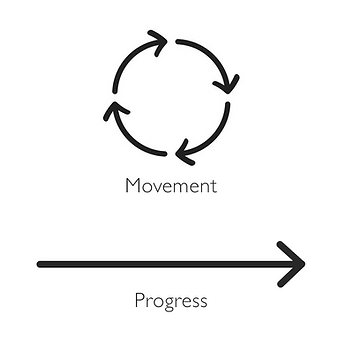
Movement within a step defines direction for progress
Within every step of the design process, there is a lot of movement. But ultimately that movement should define the direction for the next step. It's that direction that leads to progress in driving growth and positive change. Movement is a powerful tool for progress and it must be harnessed effectively and purposefully towards the desired outcomes.

Design and Development: Collaborating for Innovation
Designers need to constantly work with developers in order to ensure that design and technical considerations are aligned and integrated seamlessly. The Quick Setting Panel iteration was not possible from a coding point of view and hence, wasn't taken forward with me. It is reassuring to witness that success of a product often depends on the collaboration and synergy between design teams and development teams.